Golf Logics | 15 hours ago

Broken Shaft or Wrong Shaft? A Complete Guide to Reshafting Your Golf Clubs

A snapped shaft doesn't have to mean a new club, and a shaft that doesn't suit your swing doesn't either. Here's when reshafting makes sense, what the job involves at a professional workshop, and how to end up with a club that's better than the one you brought in.

When reshafting is the right call

The shaft is broken or damaged. Snapped at the tip, bent, or creased — if the head is in good shape, reshafting restores the club for far less than replacement. This is the most common reshaft we do on drivers, fairway woods and irons alike.

The head is fine but the shaft doesn't fit you. Too stiff, too soft, too heavy, too light — the head can be a perfect match for your swing while the shaft fights it. A reshaft keeps the head you like and fixes the part that's wrong.

You've changed as a golfer. Gained or lost swing speed, changed your tempo, come back from an injury — the shaft that suited you five years ago may not suit you now.

You want to upgrade. Modern graphite iron shafts and premium driver shafts can transform a club you already trust. Plenty of golfers reshaft a favourite driver head with a premium shaft rather than gambling on a whole new club.

A junior has outgrown a club — sometimes. Longer, stiffer shafts can extend a club's life, though honest advice sometimes says a different club is the better spend. We'll tell you which.

What a professional reshaft actually involves

Reshafting is precision work, and the steps matter:

1. Removing the old shaft. On graphite, this is done with controlled heat and proper pulling equipment. Too much heat damages the head's finish and the hosel; brute force can crack a graphite tip or damage the head itself. This step alone is where most DIY reshafts go wrong.

2. Preparing the head and the new shaft. The hosel is cleaned of old epoxy, the shaft tip is prepped to the correct tip size (.335, .350, .355 taper or .370 parallel are the common ones — they are not interchangeable), and the new ferrule is fitted.

3. Cutting to length and setting the spec. The shaft is cut to the playing length that produces the finished club length and swing weight you want — not just "standard."

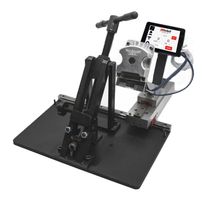
4. Epoxy and alignment. The shaft is set with professional epoxy. If the shaft is being spine-aligned (pured), its orientation is set now, before the epoxy goes on. Then it goes into our computerized curing system — rushed curing is a common cause of shafts working loose later.

5. Finishing and checking. The ferrule is turned down and finished flush, the grip is installed to size, and the finished club is checked — length, and swing weight against the rest of your set, so the rebuilt club feels like it belongs.


Steel or graphite in your irons?

Graphite iron shafts have closed most of the old gap with steel. Modern graphite offers tighter dispersion than its reputation suggests, in weights from under 60 grams to over 120, and it absorbs vibration that steel sends straight into your elbows and shoulders. Steel still wins on raw consistency of weight and on price, and plenty of strong players prefer its feedback. The right answer depends on your swing speed, your joints and your budget — which is exactly what a legacy iron shaft fitting (see below) is for.

Flex is not a standard — measure, don't guess

There is no industry-wide standard for what "stiff" or "regular" means. One manufacturer's regular can play stiffer than another's stiff, and two shafts with the same flex letter can have completely different bend profiles — one tip-stiff, one butt-stiff — and produce completely different ball flights. That's why our workshop runs frequency analysis and shaft profiling: we can measure what a shaft actually does instead of trusting the letter printed on it, and match a replacement to your swing — or to the shaft you're replacing, if you loved it.

What does reshafting cost?

The shaft itself is the main variable: a quality steel iron shaft, a premium graphite iron shaft and an exotic driver shaft are very different price points (our store stocks shafts from Fujikura, Graphite Design, ACCRA, KBS, True Temper, Nippon, Mitsubishi and more). Labour depends on the club and the work involved. What we can promise is a straight answer up front: bring the club in, we'll inspect the head, confirm it's sound, and price the whole job — shaft, ferrule, grip and labour — before any work starts. If the repair doesn't make economic sense, we'll say so.

Not sure whether the shaft is the problem?

If the club is intact but the ball flight is wrong — ballooning, weak, a consistent miss you can't shake — the smartest first step is data. At our Premium Fitting Studio, a Legacy Iron Shaft Fitting ($165) tests your current irons and identifies the shaft spec they actually need, and a Premium Driver Shaft Fitting ($175) does the same for your driver using your own head. The specs come back to the bench, and the reshaft is built exactly to them — fitted at the studio, built at the bench.


For reshafting and repairs: Golf Logics Repair Centre, 1292 Wellington Street West, Ottawa — walk-ins welcome, free parking behind the building, 613-514-0113. For a shaft fitting: the Premium Fitting Studio at 233 Armstrong Street is by appointment only — book online or call 613-514-0288.

Better Fit. Better Equipment. Better Golf.

Golf Logics

More Posts

Stock Shaft vs. Premium Aftermarket Shaft: What's Actually Different?Stock Shaft vs. Premium Aftermarket Shaft: What's Actually Different?
Stock Shaft vs. Premium Aftermarket Shaft: What's Actually Different?

Your driver came with a shaft chosen by a spreadsheet, not a fitter. Here's what "stock" really means, why flex letters can't be trusted, what premium shafts do differently — and how to find out whether one would actually help your game before you spend anything.

What Actually Happens in a Professional Club Fitting? A Step-by-Step WalkthroughWhat Actually Happens in a Professional Club Fitting? A Step-by-Step Walkthrough
What Actually Happens in a Professional Club Fitting? A Step-by-Step Walkthrough

No retail floor, no lineup, no guesswork. Here's exactly what happens from the moment you walk into our Ottawa fitting studio — the data we collect, what the numbers mean, and why an honest fitting sometimes ends with "keep your current clubs."

Regripping Your Golf Clubs: How Often You Should Do It, What It Costs, and Why It MattersRegripping Your Golf Clubs: How Often You Should Do It, What It Costs, and Why It Matters
Regripping Your Golf Clubs: How Often You Should Do It, What It Costs, and Why It Matters

Your grips are the only part of the club you actually touch. Here's how to tell when they're costing you shots, how grip size and style change your ball flight, and what a professional re-grip at our Ottawa workshop actually involves.

How Often Should Golf Club Lofts and Lies Be Checked?How Often Should Golf Club Lofts and Lies Be Checked?
How Often Should Golf Club Lofts and Lies Be Checked?

Loft and lie angles can change over time from normal play, range use, travel, and repeated impact. Even small changes can affect launch, direction, turf interaction, and consistency. Regular checks help make sure your irons and wedges are still performing the way they were designed to.

Do High-Handicap Golfers Really Benefit From Club Fitting?Do High-Handicap Golfers Really Benefit From Club Fitting?
Do High-Handicap Golfers Really Benefit From Club Fitting?

Club fitting isn’t just for low-handicap golfers. In fact, golfers with inconsistent swings can often benefit the most from equipment that better matches how they actually deliver the club. A proper fitting can improve consistency, dispersion, contact and confidence — without trying to change your swing.