

Club fitting isn’t just for low-handicap golfers. In fact, golfers with inconsistent swings can often benefit the most from equipment that better matches how they actually deliver the club. A proper fitting can improve consistency, dispersion, contact and confidence — without trying to change your swing.
How Often Should Golf Club Lofts and Lies Be Checked?
Loft and lie angles can change over time from normal play, range use, travel, and repeated impact. Even small changes can affect launch, direction, turf interaction, and consistency. Regular checks help make sure your irons and wedges are still performing the way they were designed to.
Why Loft and Lie Angles Change Over Time
Golf clubs are not permanently locked into their original specifications. Repeated impact with the ground, practice mats, hard turf, travel, and normal use can gradually alter loft and lie angles—especially in softer forged irons and wedges.
Even a small change can affect how the club sits at impact, where the ball starts, launch conditions, distance gapping, and turf interaction. That is why checking your specifications periodically is an important part of keeping a set performing consistently.
How Often Should You Have Loft and Lie Checked?
For most golfers, having loft and lie angles checked once a season is a good starting point. Golfers who play or practice frequently, use softer forged irons, or hit regularly from firm mats may benefit from having them checked more often.
You should also have your clubs checked if your distance gaps suddenly change, your normal ball flight starts behaving differently, or a club has taken a hard impact during play or travel.
At Golf Logics, we measure the actual specifications rather than assuming the clubs are still at their factory settings. That allows us to identify changes before making any adjustments.
How Golf Logics Checks Loft and Lie
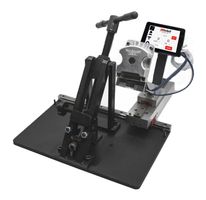
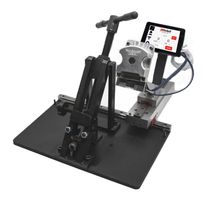
At Golf Logics, we do not rely on factory labels or assumptions. We measure the actual loft and lie of each club using precision Mitchell digital equipment so we know exactly where the club sits before any adjustment is made.
Once the measurements are recorded, we can compare them to the intended specifications, the rest of the set, and the golfer’s needs. If an adjustment is required, the goal is to make a controlled correction while maintaining proper gapping and consistency throughout the set.
For many golfers, the value is not just in changing a number. It is in confirming that every iron and wedge is actually where it should be.
The Bottom Line
Loft and lie angles are small specifications that can have a noticeable effect on how your clubs perform. That applies not only to irons and wedges, but to putters as well. Putter loft and lie can influence launch, roll, start direction, and how the putter sits at address.
Having these specifications checked periodically helps confirm that your clubs are still set up the way they should be. If something has changed, we can measure it, identify the issue, and make the appropriate adjustment rather than guessing.


