Golf Logics | 15 hours ago

Stock Shaft vs. Premium Aftermarket Shaft: What's Actually Different?

Your driver came with a shaft chosen by a spreadsheet, not a fitter. Here's what "stock" really means, why flex letters can't be trusted, what premium shafts do differently — and how to find out whether one would actually help your game before you spend anything.

What "stock shaft" really means

When you buy a driver or a set of irons off the rack, the shaft in it was selected by the club manufacturer to work acceptably for the widest possible range of golfers, at a cost that lets the club hit its retail price. Many stock shafts are "made-for" versions — shafts produced specifically for that club line, sometimes sharing a name with a famous aftermarket shaft while using different materials and tighter cost targets. None of that makes them bad. It makes them a compromise: designed for an average swing that may not resemble yours at all.

The flex letter problem

Here is the worst-kept secret in the golf equipment business: there is no industry standard for flex. No governing body defines what a "stiff" shaft must measure. Each manufacturer grades its own shafts against its own internal scale, so Brand A's regular can measure stiffer than Brand B's stiff. Two shafts with identical flex letters can also bend in completely different places — one stiff in the tip section, one stiff in the butt — producing different launch, spin and feel.


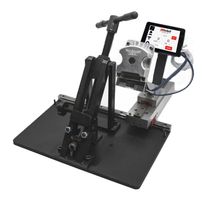
The practical consequence: shopping for a shaft by its letter is guessing. In our workshop we profile and frequency-test shafts — measuring in cycles per minute how a shaft actually oscillates — so a recommendation is based on what a shaft does, not what it's called.

The variables that actually matter

- Weight. The single biggest lever after flex. A shaft that's too heavy costs speed and tires you out by the back nine; too light and many golfers lose control of the face. Getting total club weight right is often worth more than any other change.

- Bend profile. Where the shaft flexes along its length shapes launch and spin. Tip-stiff profiles tend to launch lower with less spin; softer tips can help launch the ball higher. This is why two "stiff" shafts can fly completely differently.

- Torque. A measure of how much the shaft twists under load, in degrees. Lower torque feels firmer and can tighten dispersion for fast swings; higher torque feels smoother and helps slower swings square the face. Lower is not automatically better — it's a matching exercise.

- Materials and tolerances. Premium aftermarket shafts (Fujikura's VeloCore+ designs, Graphite Design's Tour AD line, ACCRA, Mitsubishi's Tensei and Diamana families, and others) use better-quality materials and are made with more care — higher-grade carbon, tighter manufacturing tolerances and real quality control — so the shaft in your hands behaves like the shaft that was tested and spec'd. A stock OEM shaft is built to a price; a premium aftermarket shaft is built to a standard. It is simply a much higher-quality shaft, and consistency from shaft to shaft is a large part of what the premium buys.

The quality gap is real

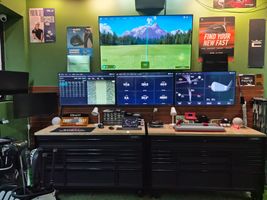
An aftermarket shaft is always a higher-quality shaft than the stock OEM shaft it replaces — better-quality materials, more care taken in the manufacture, and consistency from shaft to shaft that mass-produced stock shafts don't get. The only question a fitting answers is which premium shaft matches your swing: the right weight, the right bend profile, the right flex — measured, not guessed. Get the match right and the quality does the rest. That's why we test on the GCQuad Max before you spend anything: same head, same session, your swing, real dispersion numbers.

Testing properly: what we do

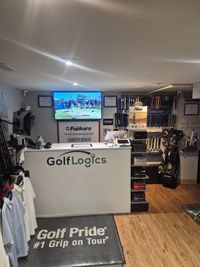
At the Golf Logics Premium Fitting Studio, shaft testing is a discipline of its own:


- Premium Driver Shaft Fitting ($175 · 60 min) — we use your driver head and work through the premium matrix on the GCQuad Max, isolating the shaft as the only variable.

- Legacy Iron Shaft Fitting ($165 · 60 min) — the same process for your existing irons, ending in a shaft specification our workshop builds to, exactly.

- Dynamic Lie Analysis & Adjustment ($165 · 60 min) — because sometimes the shaft is fine and it's the lie angle that's lying to you.


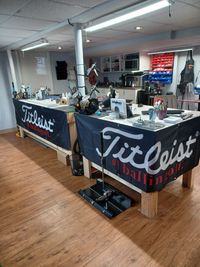
The studio stocks demo carts from Titleist, PING, Callaway, TaylorMade and Cobra and one of the region's largest premium shaft matrices — ACCRA, Fujikura, Graphite Design, Mitsubishi, True Temper, KBS, SteelFiber, AutoFlex, FreeFlex, Nippon and more. And because the specs come back to our own bench at the Repair Centre, the shaft you tested is the shaft you get, built to the measured spec.


Find out what your shaft is really doing. Book a fitting online or call the Premium Fitting Studio at 613-514-0288 — 233 Armstrong Street, Ottawa, by appointment only. Questions about a reshaft instead? The Repair Centre is at 613-514-0113.


Better Fit. Better Equipment. Better Golf.

Golf Logics

More Posts

What Actually Happens in a Professional Club Fitting? A Step-by-Step WalkthroughWhat Actually Happens in a Professional Club Fitting? A Step-by-Step Walkthrough
What Actually Happens in a Professional Club Fitting? A Step-by-Step Walkthrough

No retail floor, no lineup, no guesswork. Here's exactly what happens from the moment you walk into our Ottawa fitting studio — the data we collect, what the numbers mean, and why an honest fitting sometimes ends with "keep your current clubs."

Broken Shaft or Wrong Shaft? A Complete Guide to Reshafting Your Golf ClubsBroken Shaft or Wrong Shaft? A Complete Guide to Reshafting Your Golf Clubs
Broken Shaft or Wrong Shaft? A Complete Guide to Reshafting Your Golf Clubs

A snapped shaft doesn't have to mean a new club, and a shaft that doesn't suit your swing doesn't either. Here's when reshafting makes sense, what the job involves at a professional workshop, and how to end up with a club that's better than the one you brought in.

Regripping Your Golf Clubs: How Often You Should Do It, What It Costs, and Why It MattersRegripping Your Golf Clubs: How Often You Should Do It, What It Costs, and Why It Matters
Regripping Your Golf Clubs: How Often You Should Do It, What It Costs, and Why It Matters

Your grips are the only part of the club you actually touch. Here's how to tell when they're costing you shots, how grip size and style change your ball flight, and what a professional re-grip at our Ottawa workshop actually involves.

How Often Should Golf Club Lofts and Lies Be Checked?How Often Should Golf Club Lofts and Lies Be Checked?
How Often Should Golf Club Lofts and Lies Be Checked?

Loft and lie angles can change over time from normal play, range use, travel, and repeated impact. Even small changes can affect launch, direction, turf interaction, and consistency. Regular checks help make sure your irons and wedges are still performing the way they were designed to.

Do High-Handicap Golfers Really Benefit From Club Fitting?Do High-Handicap Golfers Really Benefit From Club Fitting?
Do High-Handicap Golfers Really Benefit From Club Fitting?

Club fitting isn’t just for low-handicap golfers. In fact, golfers with inconsistent swings can often benefit the most from equipment that better matches how they actually deliver the club. A proper fitting can improve consistency, dispersion, contact and confidence — without trying to change your swing.