
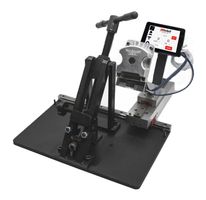
Loft and lie angles can change over time from normal play, range use, travel, and repeated impact. Even small changes can affect launch, direction, turf interaction, and consistency. Regular checks help make sure your irons and wedges are still performing the way they were designed to.
Club Fitting Isn’t Just for Better Golfers
One of the biggest misconceptions in golf is that you need a consistent swing or a low handicap before a professional fitting is worthwhile. In reality, a fitting is about understanding the swing you have today and finding equipment that works better with it.
A golfer does not need to make the exact same swing every time for useful patterns to appear. During a fitting, we look at tendencies in strike location, launch, spin, ball speed, dispersion and club delivery. Those patterns help us determine whether factors such as club length, loft, lie angle, shaft weight, shaft profile and head design are helping the golfer — or making the game more difficult.
What a Proper Fitting Can Actually Improve
A good fitting is not about chasing one perfect shot. It is about improving the overall pattern of shots a golfer produces.
Depending on the player, properly fitted equipment can help improve center-face contact, launch conditions, distance consistency, dispersion and directional control. Sometimes the biggest improvement is not extra distance at all — it is reducing the size of the miss.
The goal is to identify equipment that makes your normal swing more effective and gives you a better chance of producing playable results when the swing is less than perfect.
What We Measure During a Fitting
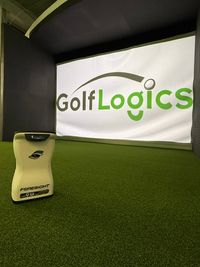
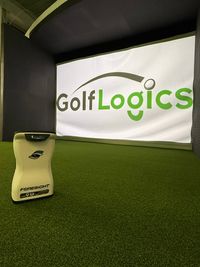
At Golf Logics, fitting decisions are based on measured performance, not guesswork. Using GCQuad Max, we can evaluate key ball and club data to understand what is actually happening at impact.
We look at factors such as ball speed, launch angle, spin rate, carry distance, total distance, dispersion, club path, face angle, angle of attack and strike location. Looking at these numbers together helps us separate equipment issues from swing tendencies.
The goal is not to chase perfect launch-monitor numbers. The goal is to find a combination of head, shaft, length, loft and lie that produces the most consistent and playable results for the golfer in front of us.
Why Inconsistent Golfers Can Benefit the Most
Many golfers assume they should wait until their swing becomes more consistent before getting fit. In practice, that can work against them.
Even an inconsistent golfer usually has repeatable tendencies. The miss may move around, but patterns still show up in strike location, launch, spin, face delivery and dispersion. A proper fitting looks for those patterns and identifies equipment that helps reduce the severity of the miss.
The right equipment will not fix a poor swing, but it can remove unnecessary variables. If a golfer is fighting a club that is too long, too heavy, too light, too upright, too flat, or poorly matched in shaft profile, they may be making the game harder than it needs to be.
Do High-Handicap Golfers Really Benefit From Club Fitting?
Club fitting isn’t just for low-handicap golfers. In fact, golfers with inconsistent swings can often benefit the most from equipment that better matches how they actually deliver the club. A proper fitting can improve consistency, dispersion, contact and confidence — without trying to change your swing.
Fitting Is Not About Selling You the Most Expensive Club
A professional fitting should be about finding the best-performing combination, not automatically recommending the most expensive option.
At Golf Logics, the objective is to compare options, measure the results and identify what actually improves performance. Sometimes the best result comes from a premium shaft or a specific head design. Other times, the improvement may come from a simpler adjustment in length, loft, lie, weight or setup.
If the numbers do not show a meaningful improvement, there is no reason to force a change.
The Bottom Line
You do not need to be a low-handicap golfer to benefit from a proper fitting. You simply need a swing that can be measured — and every golfer has one.
The purpose of fitting is to understand your tendencies, remove equipment that works against you, and build a setup that gives you the best chance of producing more consistent results.
Whether you are a beginner, a high-handicap golfer or an experienced player, better information leads to better equipment decisions.


